Passer au contenu
1 Order = 1 Tree Planted 🌲
20% Off Your First Order — Sign Up to Unlock

The Moissanite Insider

How to Choose a Moissanite Ring: The STDIAM Buyer’s Guide

par HHTang 02 Feb 2026 0 commentaire

Choosing a moissanite ring can feel surprisingly complex. Stone shape, size, color, cut, setting style, and metal can all change how the finished piece looks and feels on the hand.

The good news is that you do not need to chase the highest number on every specification. A beautiful ring comes from the balance between the gemstone, its proportions, and the setting around it.

This guide explains the details worth considering before choosing a moissanite ring — and which specifications matter most in real-world wear.


1. Start with Cut and Proportion

Cut is one of the most important factors in how a moissanite appears.

A well-proportioned stone allows light to enter, reflect through the facets, and return toward the eye in a balanced way. Poor proportions can make even a very clear gemstone appear less lively.

Rather than focusing only on labels such as “Excellent Cut,” look at the overall result: symmetry, facet pattern, brightness, and whether the stone appears balanced from different angles.

At STDIAM, we pay close attention to proportion, symmetry, polish, and overall light performance when considering stones for our jewelry.

You can learn more about our approach in The 4Cs of STDIAM Moissanite.


2. Understand Color Rather Than Chasing a Letter

Modern moissanite is available in colorless and near-colorless appearances, along with intentionally colored varieties.

You may see sellers or gemstone certificates use familiar terms such as D, E, or F color to describe very colorless stones. However, moissanite should not be assumed to follow exactly the same standardized color-grading system used for diamonds.

For most shoppers, the more useful question is simply: Does the stone look clean and colorless in the lighting and metal color I plan to wear?

A bright, neutral-looking moissanite can work beautifully in white, yellow, or rose-toned settings. Slight variations may also appear differently depending on stone size, shape, lighting, and viewing angle.


3. Look for Clean Clarity

Clarity describes internal or surface characteristics that may affect the appearance of a gemstone.

Terms such as VVS1 are sometimes used by sellers or certificates when describing moissanite, but these terms originate from diamond clarity grading conventions.

For moissanite, what matters most in everyday wear is whether the stone has a clean, transparent appearance without distracting visible characteristics.

Extremely high clarity terminology does not automatically make one stone more beautiful than another. Cut, proportion, symmetry, and overall appearance should be considered together.


4. Choose Shape and Size Together

Carat equivalent or stone weight does not tell you exactly how large a ring will appear on the hand.

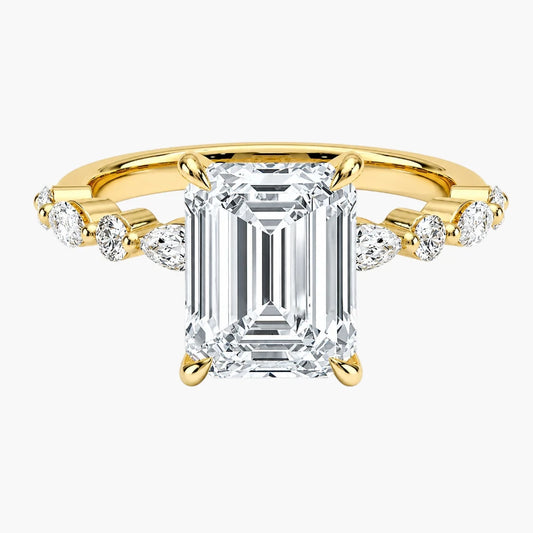
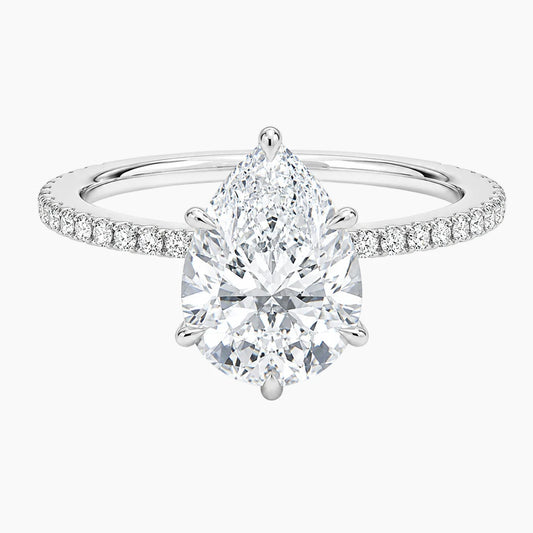
Different shapes distribute their dimensions differently. An elongated oval, pear, marquise, emerald, or radiant cut may create more visible finger coverage than a round stone with a similar stated weight.

That is why we recommend paying attention to the stone's millimeter dimensions as well as its stated carat equivalent.

Proportion matters too. A larger stone is not automatically the better choice. The center stone should feel balanced with the width of the band, the setting, and your own preference for either an understated or more prominent look.

If you are unsure about scale, our Ring Size Guide can help with sizing before ordering.


5. Consider the Setting Profile

The setting has a major influence on both appearance and everyday wear.

A classic solitaire keeps the focus on the center stone, while a hidden halo adds detail beneath the stone without dramatically changing the view from above. Bezel-inspired settings can create a cleaner, more streamlined silhouette, while three-stone and pavé designs offer greater visual detail.

Also consider how high the stone sits above the finger.

A higher setting can create a more prominent side profile and may allow another band to sit more closely beside the ring. A lower profile can feel more compact and may suit someone who prefers a quieter, more practical silhouette.

There is no single best setting. The right choice depends on how you want the ring to look and how you plan to wear it.


6. Choose the Metal for the Way You Wear Jewelry

The same moissanite can look noticeably different depending on the metal around it.

Cool-toned metals can emphasize a crisp, colorless appearance, while yellow and rose tones create a warmer contrast around the stone.

Beyond color, consider durability, maintenance, weight, and how frequently you expect to wear the piece.

STDIAM jewelry may be offered in different metal options depending on the design. Always review the individual product specifications so you know exactly which metal and finish you are choosing.

This becomes especially important when comparing plated jewelry with solid gold options, as their care requirements and long-term maintenance are different.


7. Certification Is Useful — But It Is Not the Whole Story

Some moissanite jewelry is supplied with a gemstone certificate that records identifying information and stated characteristics of the stone.

Selected STDIAM moissanite pieces include GRA certification where specified on the product page.

A certificate can provide useful documentation, but it should not replace looking at the gemstone itself. Two stones carrying similar specifications can still appear different because of cut, proportions, facet pattern, and overall finishing.

We recommend considering certification as one part of the purchase rather than treating a single grade or document as the complete measure of quality.


What Matters Most When Choosing Moissanite?

If you are comparing several rings, prioritize the finished appearance rather than trying to maximize every specification.

  • Cut and proportion: Does the stone look balanced and lively?
  • Color: Does it have the appearance you want in your preferred metal?
  • Clarity: Does the stone look clean to the eye?
  • Size: Are the dimensions comfortable and proportionate on the hand?
  • Setting: Does the profile suit your style and routine?
  • Metal: Are you comfortable with its appearance and maintenance?
  • Documentation: Are the stated specifications and included certification clear?

Is Moissanite Suitable for Everyday Wear?

Moissanite measures approximately 9.25 on the Mohs hardness scale, making it highly resistant to everyday scratching and a practical gemstone for frequently worn jewelry. GIA likewise describes moissanite as very hard and durable, although not as hard as diamond. :contentReference[oaicite:1]{index=1}

That does not make the entire ring indestructible. Prongs, settings, metal surfaces, and accent stones can still experience wear or damage over time.

Removing jewelry before strenuous activities, swimming, handling harsh chemicals, or situations where the ring may experience strong impact can help preserve the piece.

See our Jewelry Care Guide for more detailed care recommendations.


Final Thoughts

The best moissanite ring is not necessarily the one with the largest stone, the highest stated clarity, or the most complicated setting.

Look instead for a piece in which the stone, proportions, setting, and metal work naturally together.

A thoughtfully chosen moissanite should feel refined when viewed up close, balanced on the hand, and appropriate for the way you actually intend to wear it.

Explore our moissanite ring collection, or continue learning with our What Is Moissanite Guide.

Article précédent
Article suivant

Laisser un commentaire

Tous les commentaires du blog sont vérifiés avant la publication

Merci de vous être abonné !

Cet email a été enregistré !

Achetez le look

Choisissez les options

Modifier l'option

Choisissez les options

this is just a warning
Se connecter
Panier
0 articles