


-
The Isolde Princess-Cut Lab-Grown Alexandrite Filigree Necklace - SilverInspired by ornamental ironwork and the symmetry of a vintage crest, the Isolde Necklace centers a princess-cut lab-grown alexandrite within sculpted flourishes. Its shifting blue-violet tones bring luminous contrast to a design that feels romantic, intricate, and timeless. Center Stone Lab-Grown Alexandrite Stone...
- $158.00
- $158.00
- Prezzo unitario
- per
-
Silver
-
The Avielle Pear-Cut Lab-Grown Alexandrite Hummingbird Necklace - SilverInspired by a hummingbird suspended in flight, the Avielle Necklace sets a pear-cut lab-grown alexandrite at the heart of a sculpted silhouette. Its shifting blue-violet color and luminous accents evoke movement, lightness, and the fleeting beauty of a garden in bloom. Center Stone...
- $198.00
- $198.00
- Prezzo unitario
- per
-
Silver
-
The Elara Hexagon-Cut Lab-Grown Alexandrite Halo Necklace - SilverInspired by the quiet brilliance of a distant constellation, the Elara Necklace centers an elongated hexagon-cut lab-grown alexandrite within a radiant halo. Its shifting blue-violet tones and crisp step facets create a refined interplay of geometry, light, and vintage elegance. Center Stone Lab-Grown...
- $258.00
- $258.00
- Prezzo unitario
- per
-
Silver
-
The Astrelle Kite-Cut Lab-Grown Alexandrite Halo Necklace - SilverInspired by a star emerging at twilight, the Astrelle Necklace frames a kite-cut lab-grown alexandrite within a sculpted halo of light. Its geometric silhouette and shifting blue-violet tones create a luminous balance of celestial drama, timeless beauty, and modern refinement. Center Stone Lab-Grown...
- $278.00
- $278.00
- Prezzo unitario
- per
-
Silver
-
The Sylvara Kite-Cut Lab-Grown Alexandrite Botanical Necklace - SilverInspired by new leaves unfolding beneath twilight, the Sylvara Necklace suspends a kite-cut lab-grown alexandrite among sculpted botanical details. Its shifting blue-violet color and elongated geometry create a graceful balance of organic movement, light, and modern refinement. Center Stone Lab-Grown Alexandrite Stone Weight...
- $268.00
- $268.00
- Prezzo unitario
- per
-
Silver
-
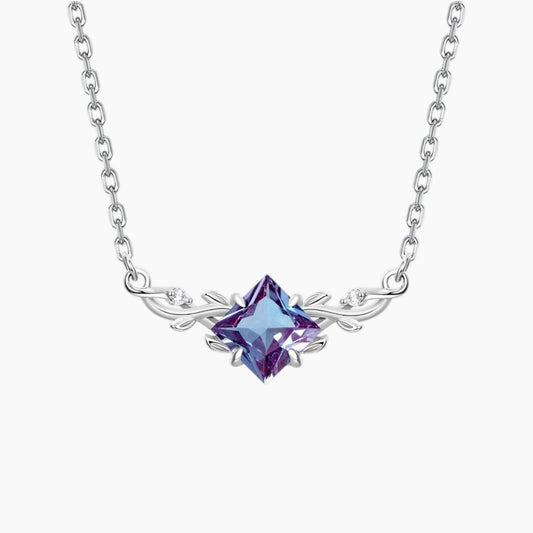
The Sylvara Lab-Grown Alexandrite Vine Necklace - SilverInspired by a hidden bloom beneath twilight skies, the Sylvara Necklace cradles a princess-cut lab-grown alexandrite within sculpted botanical vines. Its shifting color and geometric silhouette create a poetic balance of nature, light, and modern elegance. Center Stone Lab-Grown Alexandrite Stone Weight 0.5...
- $178.00
- $178.00
- Prezzo unitario
- per
-
Silver


Alexandrite Jewelry
Discover lab-grown alexandrite jewelry defined by its distinctive response to light, refined proportions and considered settings. Each design reveals a changing expression as lighting conditions shift.
Color-Shift Beauty
Tones can change with different light sources.
Mohs 8.5 Hardness
Very good hardness for regular jewelry wear.
Lab-Grown Origin
Created under controlled growth conditions.




The Beauty of Alexandrite
Alexandrite Story
A Gemstone Shaped by Light
Alexandrite is a variety of chrysoberyl known for its remarkable response to different light sources. Its appearance can shift in tone as lighting conditions change, giving the gemstone a distinctive visual character. Lab-grown alexandrite recreates this crystal structure under controlled growth conditions.
Appearance can shift under different light sources.
Alexandrite belongs to the chrysoberyl mineral family.
Strong hardness suited to regular jewelry wear.
Created within controlled gemstone growth conditions.
Alexandrite Guide
Everything You Need to Know
What is lab-grown alexandrite?
Lab-grown alexandrite is alexandrite created under controlled conditions rather than formed naturally underground. Alexandrite is a variety of chrysoberyl valued for its distinctive response to changing light.
Is lab-grown alexandrite a real gemstone?
Yes. Lab-grown alexandrite is a real gemstone created through a different growth process. It shares the essential crystal structure and mineral characteristics associated with alexandrite.
Why does alexandrite appear to change color?
Alexandrite interacts differently with the wavelengths present in different light sources. Because daylight, indoor lighting and other environments have different light characteristics, the gemstone may appear to shift in tone.
The strength and direction of this visual change can vary from stone to stone.
What colors can alexandrite display?
Alexandrite can display a range of tones depending on the stone and lighting environment. Blue-green, teal, violet, purple and warmer tones may be visible, but the exact color shift should not be expected to look identical in every gemstone or under every light source.
Is alexandrite suitable for everyday jewelry?
Alexandrite measures approximately 8.5 on the Mohs hardness scale, giving it very good resistance to scratching and making it well suited to regular jewelry wear.
As with all fine jewelry, the gemstone and setting should still be protected from strong impacts and abrasive surfaces.
What is the difference between lab-grown and natural alexandrite?
The primary difference is origin. Natural alexandrite forms through geological processes, while lab-grown alexandrite develops within a controlled growth environment.
Growth characteristics, inclusions, availability and pricing may also differ.
Does lab-grown alexandrite fade over time?
Its inherent gemstone color does not normally fade through ordinary wear. Oils, lotions and surface residue can make the stone appear temporarily less bright and can usually be removed through gentle cleaning.
How should I care for alexandrite jewelry?
Clean alexandrite jewelry using lukewarm water, mild soap and a soft brush. Rinse carefully and dry with a soft, lint-free cloth. Avoid harsh chemicals, abrasive cleaners and strong impacts.
When not being worn, store your piece separately in its original STDIAM walnut wood box to help reduce contact with other jewelry.
Free Shipping
Worldwide
Easy Returns
Hassle-Free
2-Year Warranty
Included
Secure Payment
Protected Checkout
1 Order = 1 Tree
Planted
- La scelta di una selezione comporta l'aggiornamento dell'intera pagina.