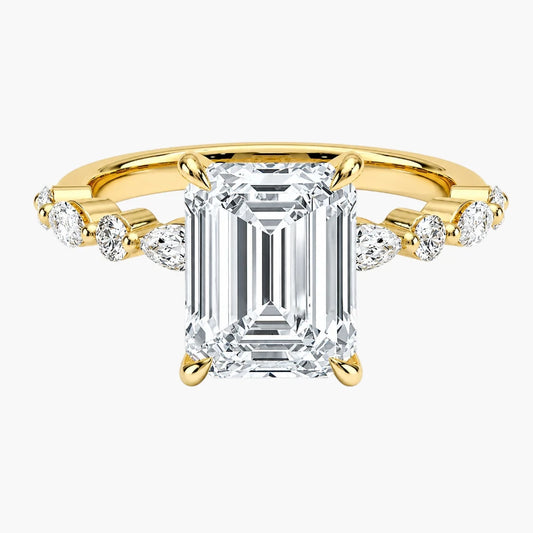
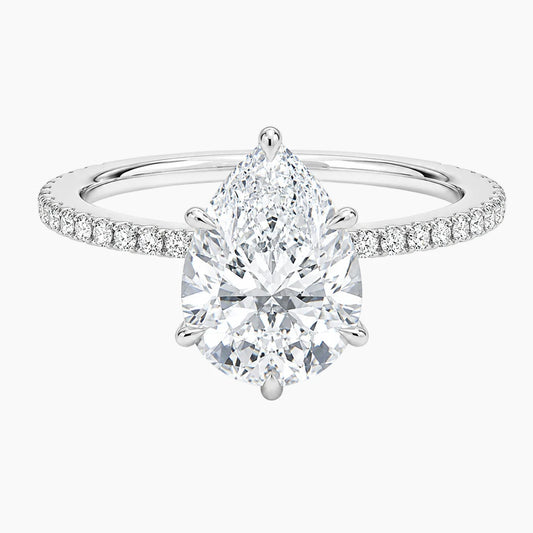
When you press a standard diamond tester against a moissanite stone, it often beeps and lights up green—just as it would for a natural diamond. This leads many to wonder: is moissanite actually a diamond, or is the tester flawed?
1. How Diamond Testers Work Most basic diamond testers are actually thermal conductivity meters. Because natural diamonds are exceptional heat conductors, these devices measure how quickly heat travels through the stone to determine if it is a diamond.
2. Moissanite’s "Superpower": High Thermal Conductivity Moissanite (Silicon Carbide) is physically very similar to diamond (Carbon). Most importantly, it is also an excellent conductor of heat. When the tester touches a moissanite, the heat flow is fast enough to trigger the "Diamond" signal on the device.
3. Does This Mean Moissanite Is a "Fake" Diamond? Not at all. Moissanite is a unique gemstone in its own right. It boasts higher brilliance (fire) than a diamond and incredible durability (9.25 on the Mohs scale). Passing a thermal tester simply proves that moissanite is a high-performance stone that rivals the king of gems in physical properties.
4. How to Tell the Difference? To distinguish the two with 100% accuracy, professionals use a "Moissanite Tester" (which measures electrical conductivity instead of heat) or look for "double refraction" under a jeweler's loupe—a optical characteristic unique to moissanite.
Final Thought The fact that moissanite passes a diamond tester is a testament to its premium quality. For those seeking an ethical, durable, and stunning alternative to mined diamonds, moissanite offers unbeatable value without compromising on the "diamond-like" experience.